How Many Meters of Filament in 1kg PLA Filament?
Filament Length Calculator
Length is calculated based on mass, material density, and filament diameter.
1.Quick Answer: How Many Meters Are in 1kg PLA?
For standard PLA filament, a 1kg spool typically contains approximately:
- 1.75mm PLA → ~330–335 meters
- 2.85mm PLA → ~110–125 meters
These values are widely used across the 3D printing industry and are also consistent with manufacturer specifications—for example, some commercial PLA spools explicitly list ~335 meters for 1kg at 1.75mm diameter
Although these numbers are commonly referenced, they are not exact. The actual filament length on a spool can vary slightly due to several physical and manufacturing factors.
2. How Is Filament Length Calculated?
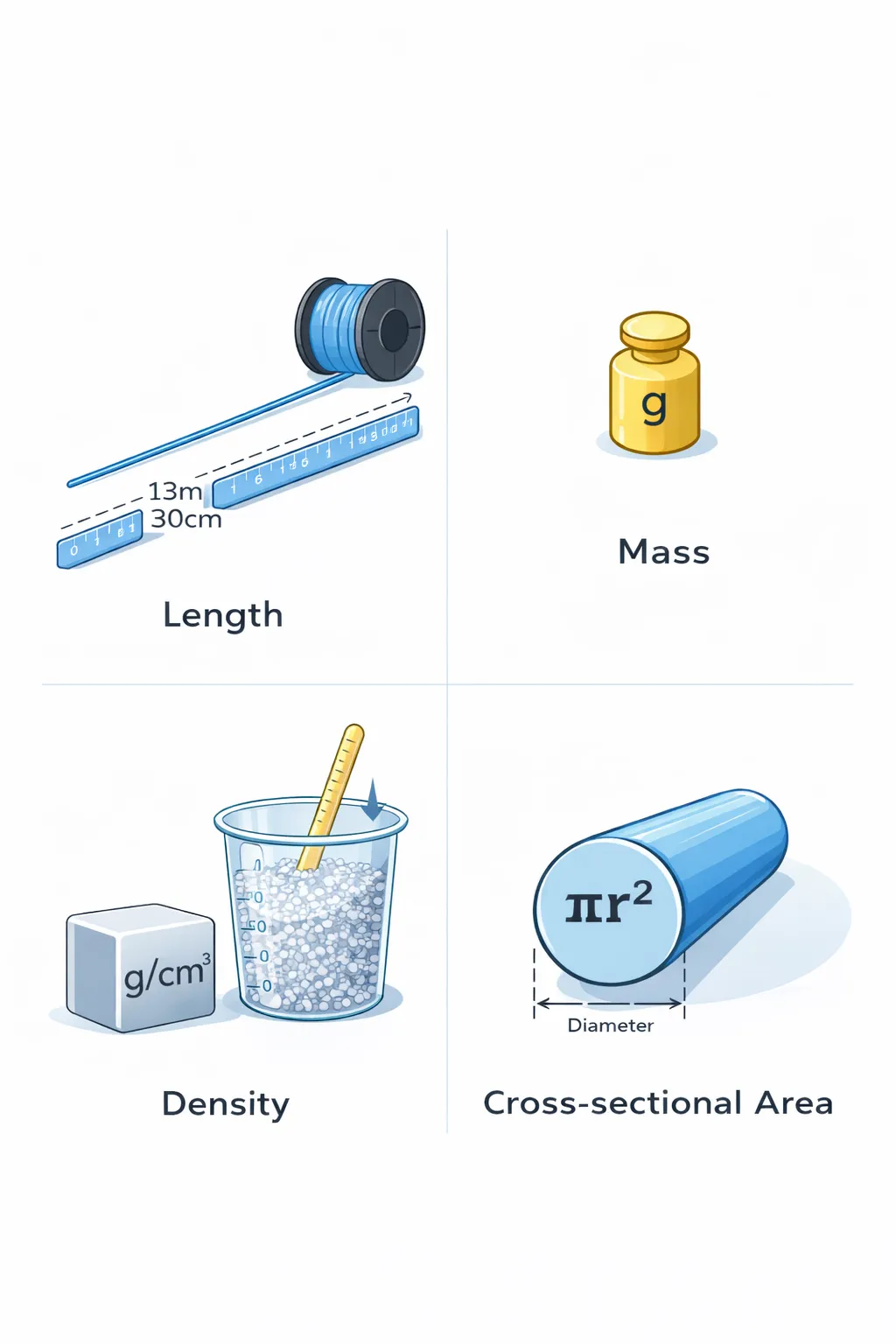
Filament length is calculated using the material’s weight, density, and cross-sectional area:
Length = Mass ÷ (Density × Cross-sectional Area)
For round filament:
Cross-sectional Area = π × (d / 2)²
So the full formula becomes:
Length = Mass ÷ (Density × π × (d / 2)²)
2.1 Material Density
The most important variable is material density.
Scientific and industrial data consistently show that PLA has an average density of approximately:
Since filament length is derived from:
Length = Mass ÷ (Density × Cross-sectional Area)
a higher density means less volume per kilogram, and therefore shorter total filament length.
Even small density variations—caused by additives like carbon fiber, silk modifiers, or color pigments—can slightly change the final length.
2.2 Diameter Tolerance
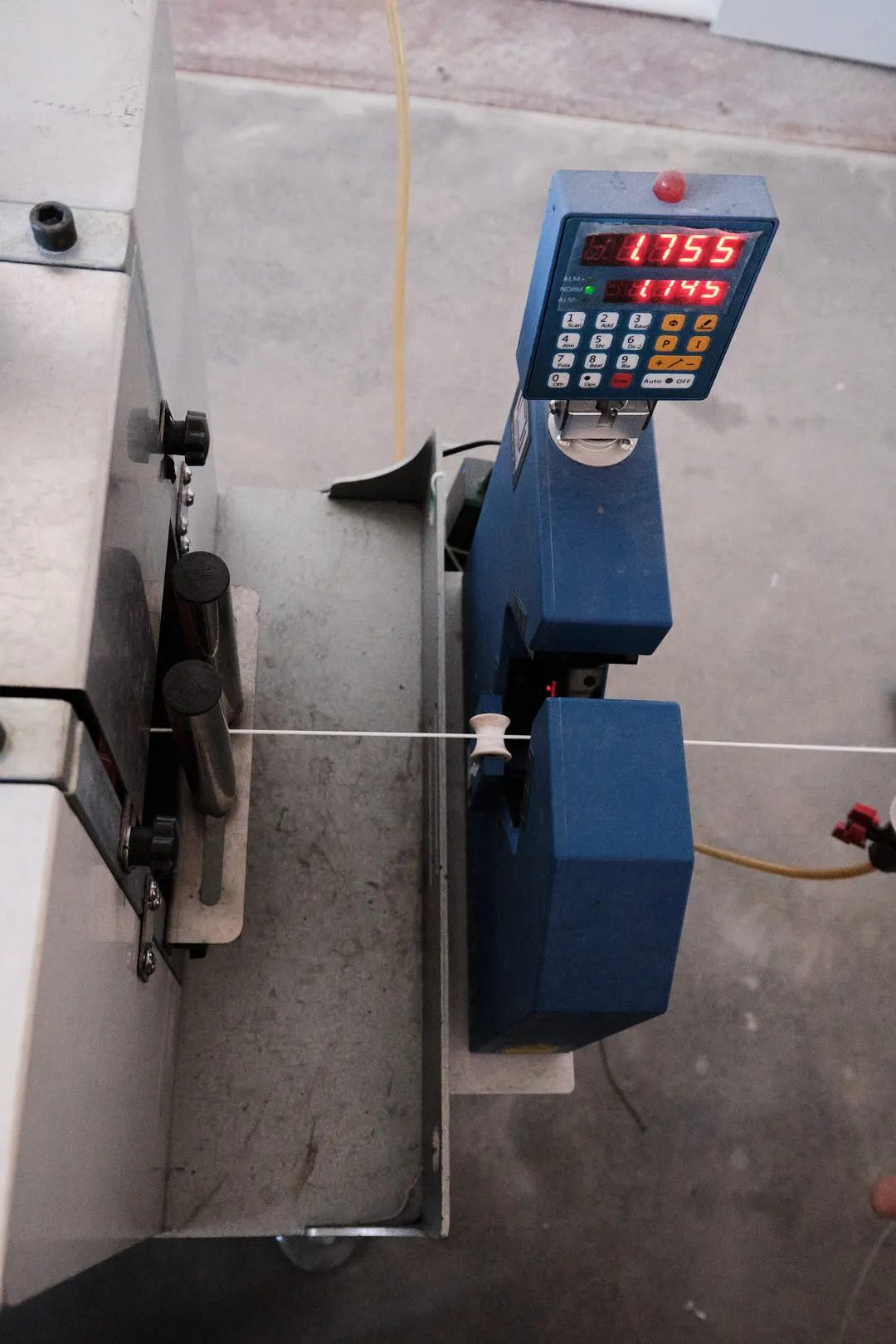
Filament is never perfectly 1.75mm or 2.85mm. Most manufacturers specify tolerances such as:
- 1.75 ± 0.02 mm 
Because cross-sectional area scales with the square of the diameter:
- A slightly thinner filament → longer total length
- A slightly thicker filament → shorter total length
This is one of the main reasons two “1kg spools” can have different actual meter counts.
2.3. Manufacturing and Material Variations
Real-world filament is not a perfect theoretical cylinder. Variations can come from:
- Additives (wood, metal, carbon fiber)
- Moisture content during extrusion
- Spooling tension and packing density
- Polymer formulation differences
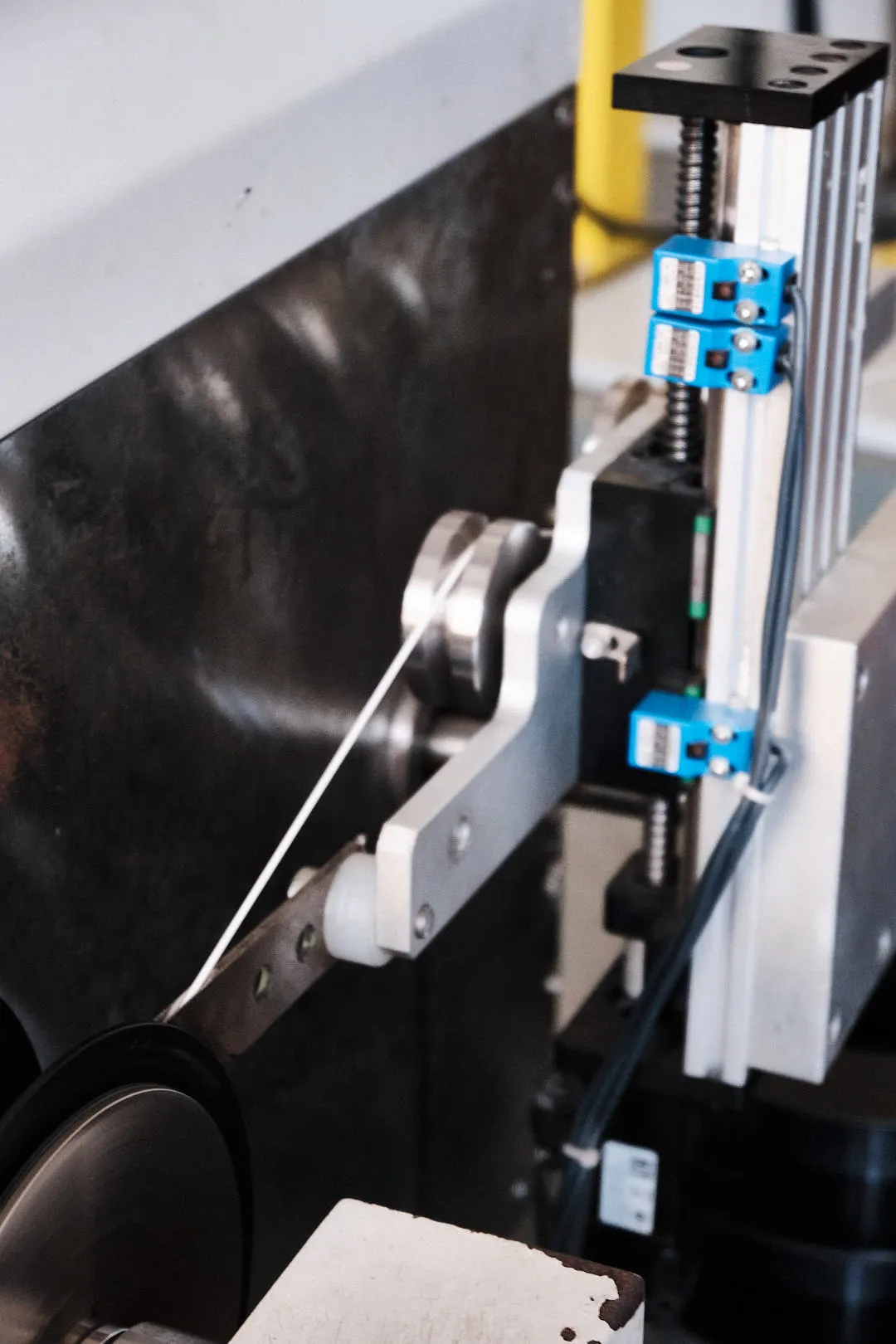
For example, composite or filled filaments can significantly deviate from standard PLA density, leading to noticeable changes in total length per kilogram
2.4.PLA Filament Length Calculation Examples
| Scenario | Mass (g) | Density (g/cm³) | Diameter (mm) | Cross-sectional Area Calculation | Area (cm²) | Length Formula | Final Length (Estimated) |
|---|---|---|---|---|---|---|---|
| Standard PLA (Example 1) | 1000 | 1.24 | 1.75 | π × (0.175 ÷ 2)² = 3.1416 × (0.0875)² | ≈ 0.02405 | 1000 ÷ (1.24 × 0.02405) | ≈ 335 m |
| Standard PLA (Example 2) | 1000 | 1.24 | 2.85 | π × (0.285 ÷ 2)² = 3.1416 × (0.1425)² | ≈ 0.0637 | 1000 ÷ (1.24 × 0.0637) | ≈ 127 m |
| Tolerance (Thinner) | 1000 | 1.24 | 1.73 | π × (0.173 ÷ 2)² = 3.1416 × (0.0865)² | ≈ 0.02350 | 1000 ÷ (1.24 × 0.02350) | ≈ 343 m |
| Nominal Diameter | 1000 | 1.24 | 1.75 | π × (0.175 ÷ 2)² = 3.1416 × (0.0875)² | ≈ 0.02405 | 1000 ÷ (1.24 × 0.02405) | ≈ 335 m |
| Tolerance (Thicker) | 1000 | 1.24 | 1.77 | π × (0.177 ÷ 2)² = 3.1416 × (0.0885)² | ≈ 0.02460 | 1000 ÷ (1.24 × 0.02460) | ≈ 327 m |
3. Why Different Materials Have Different Lengths
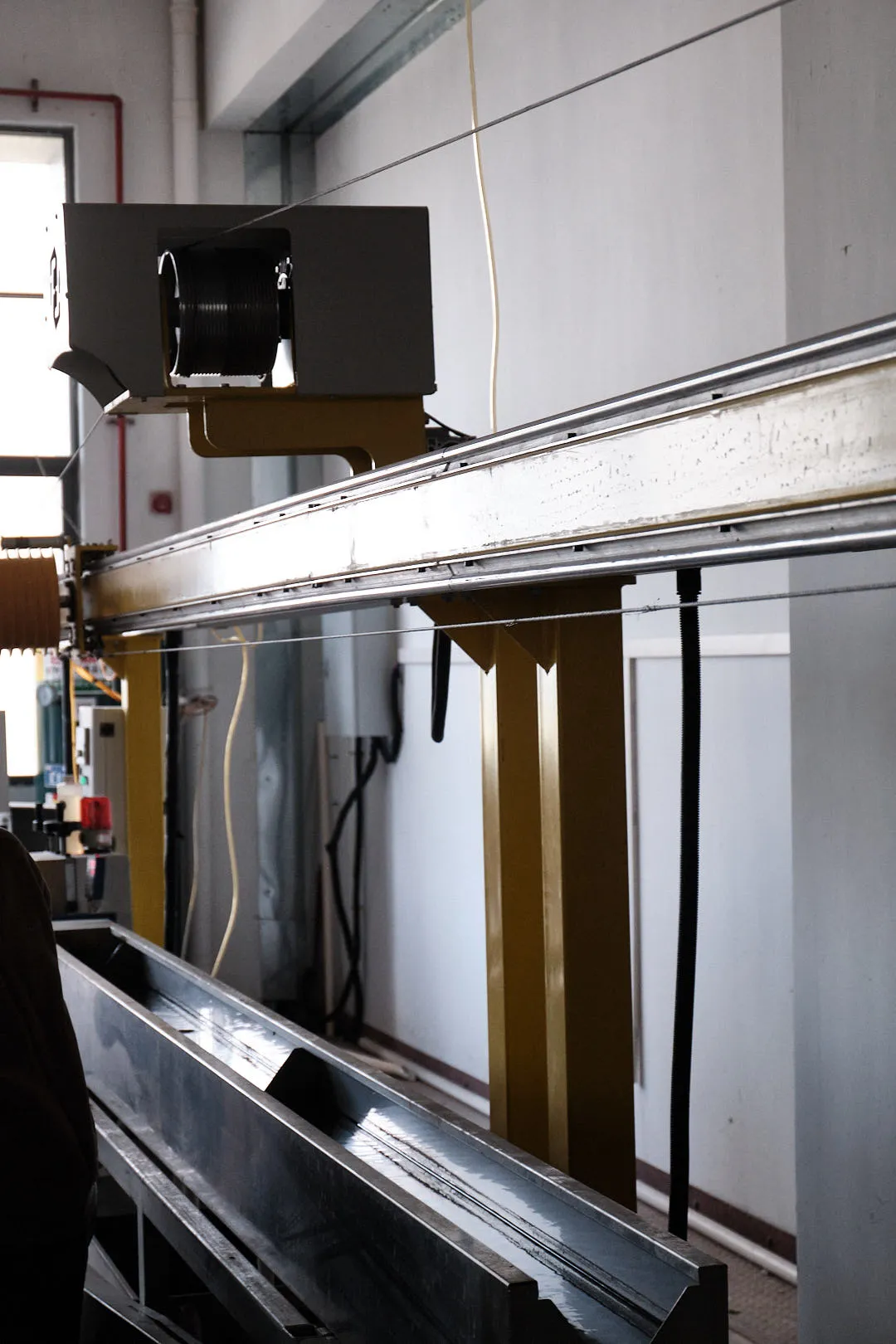
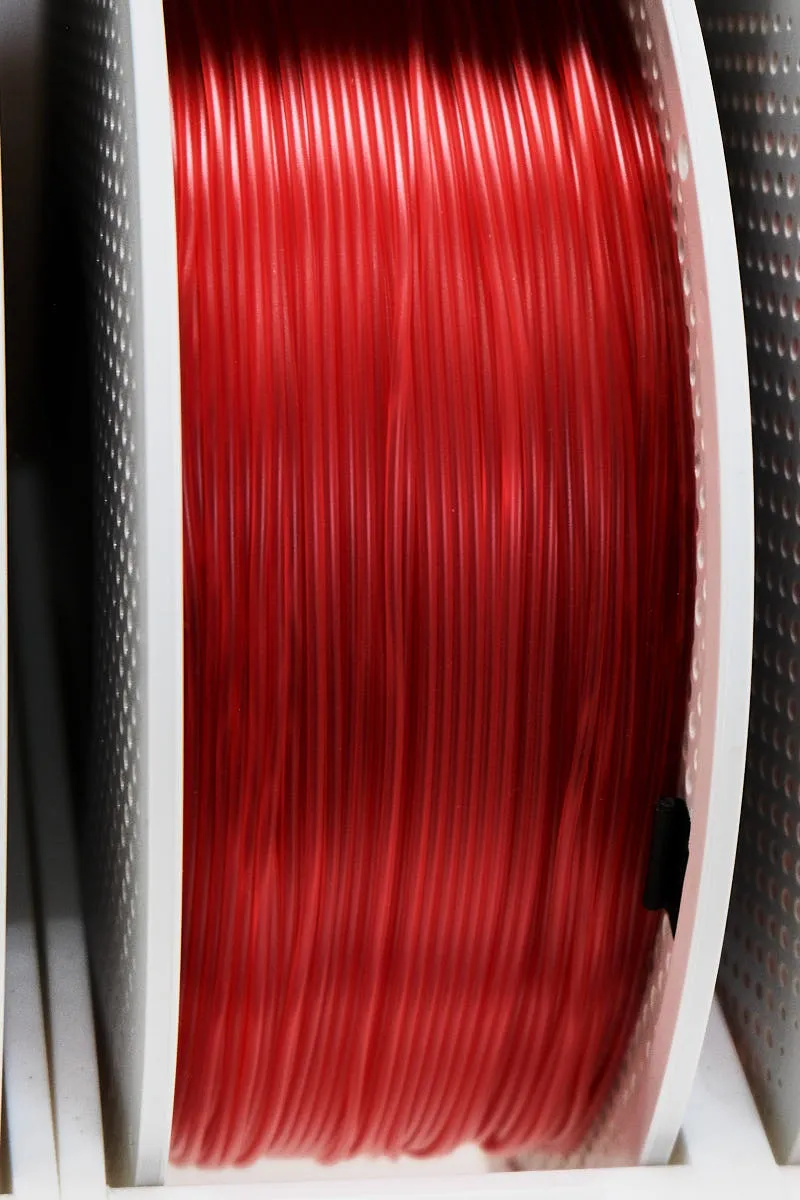
Even when filament spools have the same weight (1kg) and diameter (e.g., 1.75mm), the total length varies between materials.
The key reason lies in:
Differences in raw material composition and molecular structure
4 Common Filament Material Density and Length Comparison
| Material | Mass (g) | Density (g/cm³) | Diameter (mm) | Cross-sectional Area Calculation | Area (cm²) | Length Formula | Final Length (Estimated) |
|---|---|---|---|---|---|---|---|
| PLA | 1000 | 1.24 | 1.75 | π × (0.175 ÷ 2)² | 0.02405 | 1000 ÷ (1.24 × 0.02405) | ≈ 335 m |
| ABS | 1000 | 1.04 | 1.75 | Same as above | 0.02405 | 1000 ÷ (1.04 × 0.02405) | ≈ 400 m |
| PETG | 1000 | 1.27 | 1.75 | Same as above | 0.02405 | 1000 ÷ (1.27 × 0.02405) | ≈ 327 m |
| Nylon (PA) | 1000 | 1.12 | 1.75 | Same as above | 0.02405 | 1000 ÷ (1.12 × 0.02405) | ≈ 371 m |
| TPU (Flexible) | 1000 | 1.22 | 1.75 | Same as above | 0.02405 | 1000 ÷ (1.22 × 0.02405) | ≈ 341 m |
| PC (Polycarbonate) | 1000 | 1.30 | 1.75 | Same as above | 0.02405 | 1000 ÷ (1.30 × 0.02405) | ≈ 320 m |
| ASA | 1000 | 1.05 | 1.75 | Same as above | 0.02405 | 1000 ÷ (1.05 × 0.02405) | ≈ 396 m |
| HIPS | 1000 | 1.03 | 1.75 | Same as above | 0.02405 | 1000 ÷ (1.03 × 0.02405) | ≈ 404 m |
| PVA | 1000 | 1.23 | 1.75 | Same as above | 0.02405 | 1000 ÷ (1.23 × 0.02405) | ≈ 338 m |
| PP (Polypropylene) | 1000 | 0.90 | 1.75 | Same as above | 0.02405 | 1000 ÷ (0.90 × 0.02405) | ≈ 462 m |
| POM (Acetal) | 1000 | 1.40 | 1.75 | Same as above | 0.02405 | 1000 ÷ (1.40 × 0.02405) | ≈ 297 m |
| PMMA (Acrylic) | 1000 | 1.18 | 1.75 | Same as above | 0.02405 | 1000 ÷ (1.18 × 0.02405) | ≈ 352 m |
| Wood-filled PLA | 1000 | 1.28 | 1.75 | Same as above | 0.02405 | 1000 ÷ (1.28 × 0.02405) | ≈ 325 m |
| Carbon Fiber PLA / PETG | 1000 | 1.30 | 1.75 | Same as above | 0.02405 | 1000 ÷ (1.30 × 0.02405) | ≈ 320 m |
| Metal-filled PLA | 1000 | 2.50 | 1.75 | Same as above | 0.02405 | 1000 ÷ (2.50 × 0.02405) | ≈ 166 m |
| PEEK | 1000 | 1.31 | 1.75 | Same as above | 0.02405 | 1000 ÷ (1.31 × 0.02405) | ≈ 317 m |
| PEI (Ultem) | 1000 | 1.27 | 1.75 | Same as above | 0.02405 | 1000 ÷ (1.27 × 0.02405) | ≈ 327 m |
Conclusion
So, how many meters of filament are in a 1kg spool? For standard 1.75mm PLA, the answer is approximately 330–335 meters. However, as this guide shows, the exact length depends entirely on material density and filament diameter.
More importantly, instead of relying on fixed numbers, you now understand how to calculate filament length yourself. By using the formula Length = Mass ÷ (Density × Cross-sectional Area), you can estimate the remaining length of any filament—whether it’s PLA, ABS, PETG, or composite materials.
This approach gives you far more control when planning prints, managing material usage, and comparing different filaments. If you’re working with multiple materials or partial spools, learning how to calculate filament length is far more valuable than memorizing a single number.
Use the calculator and reference tables in this guide to quickly estimate your filament length and make more informed 3D printing decisions.
OEM & Wholesale Filament Services by VoxelFuse3D
Private label and OEM filament manufacturing
VoxelFuse3D provides OEM and private label filament manufacturing for brands and distributors.
Services include material selection, color formulation, diameter specification, packaging, and branding, with production managed under controlled manufacturing standards.

Wholesale supply of established filament brands
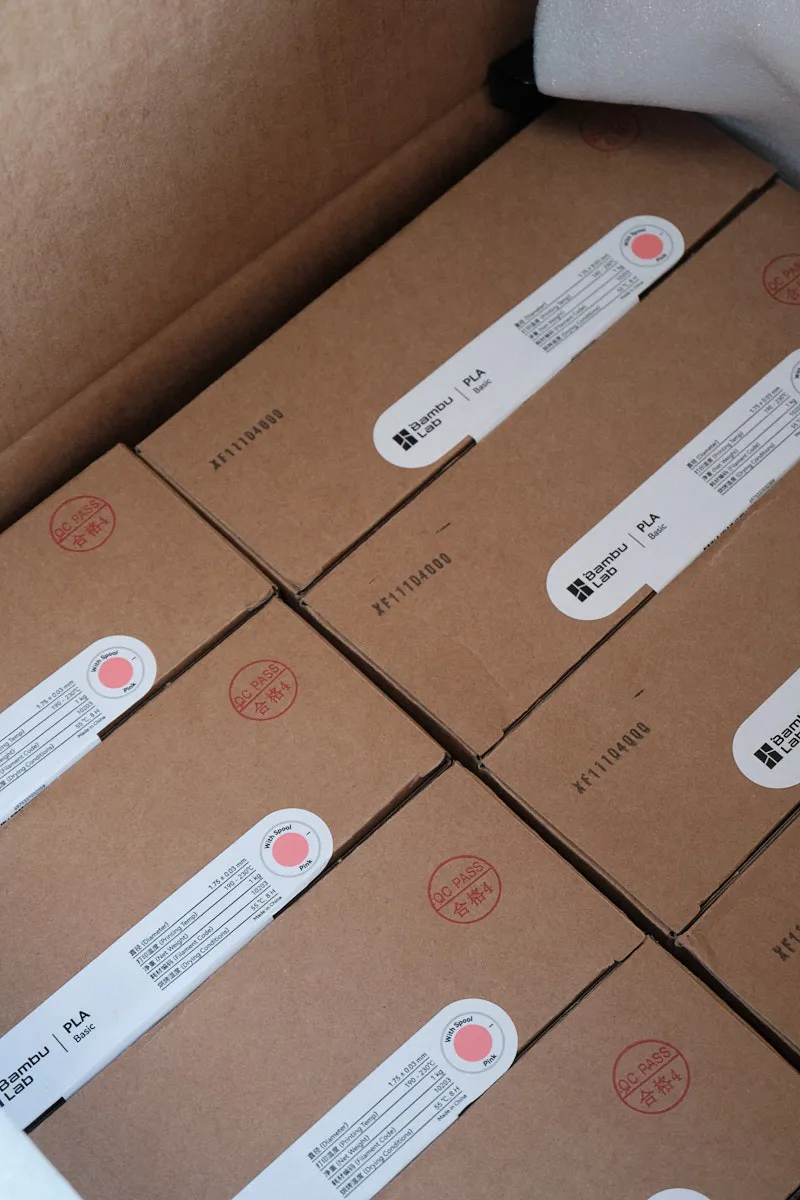
VoxelFuse3D provides OEM and private label filament manufacturing for brands and distributors.
Services include material selection, color formulation, diameter specification, packaging, and branding, with production managed under controlled manufacturing standards.
Professional sourcing with stable pricing and quality assurance
VoxelFuse3D provides OEM and private label filament manufacturing for brands and distributors.
Services include material selection, color formulation, diameter specification, packaging, and branding, with production managed under controlled manufacturing standards.